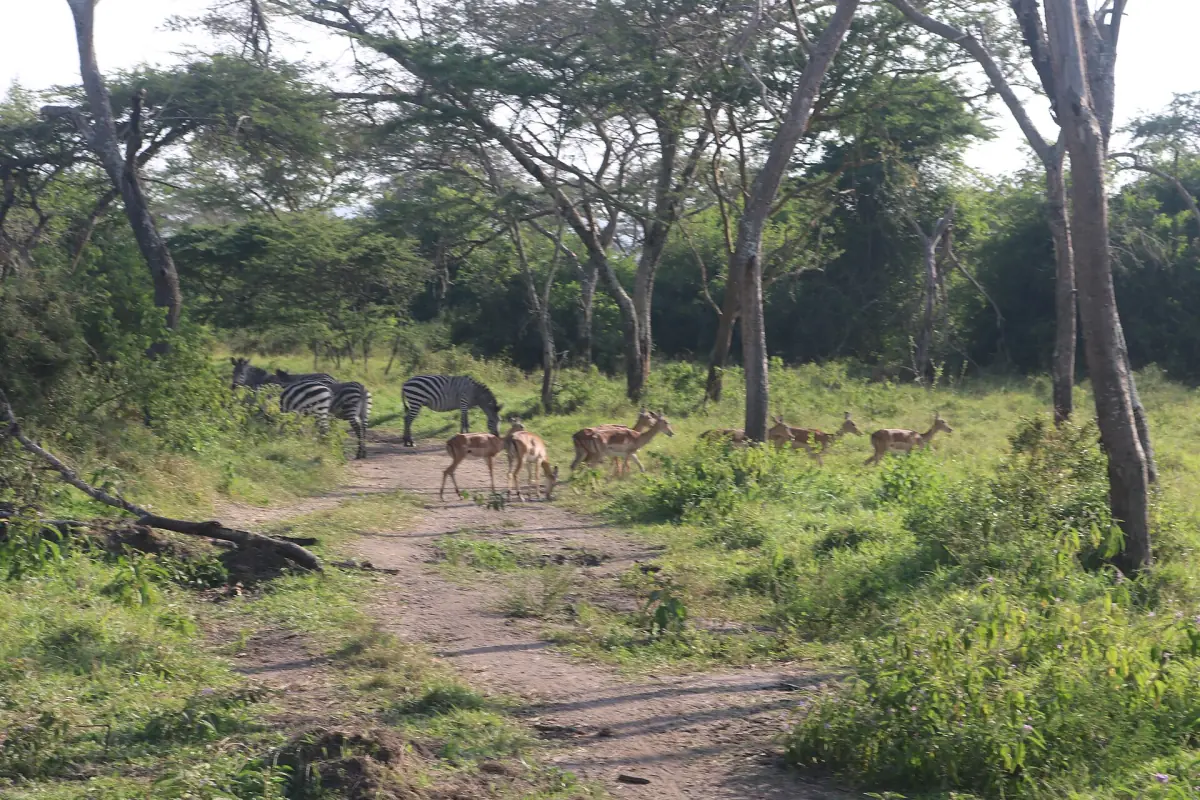
Lake Mburo animals at a glance
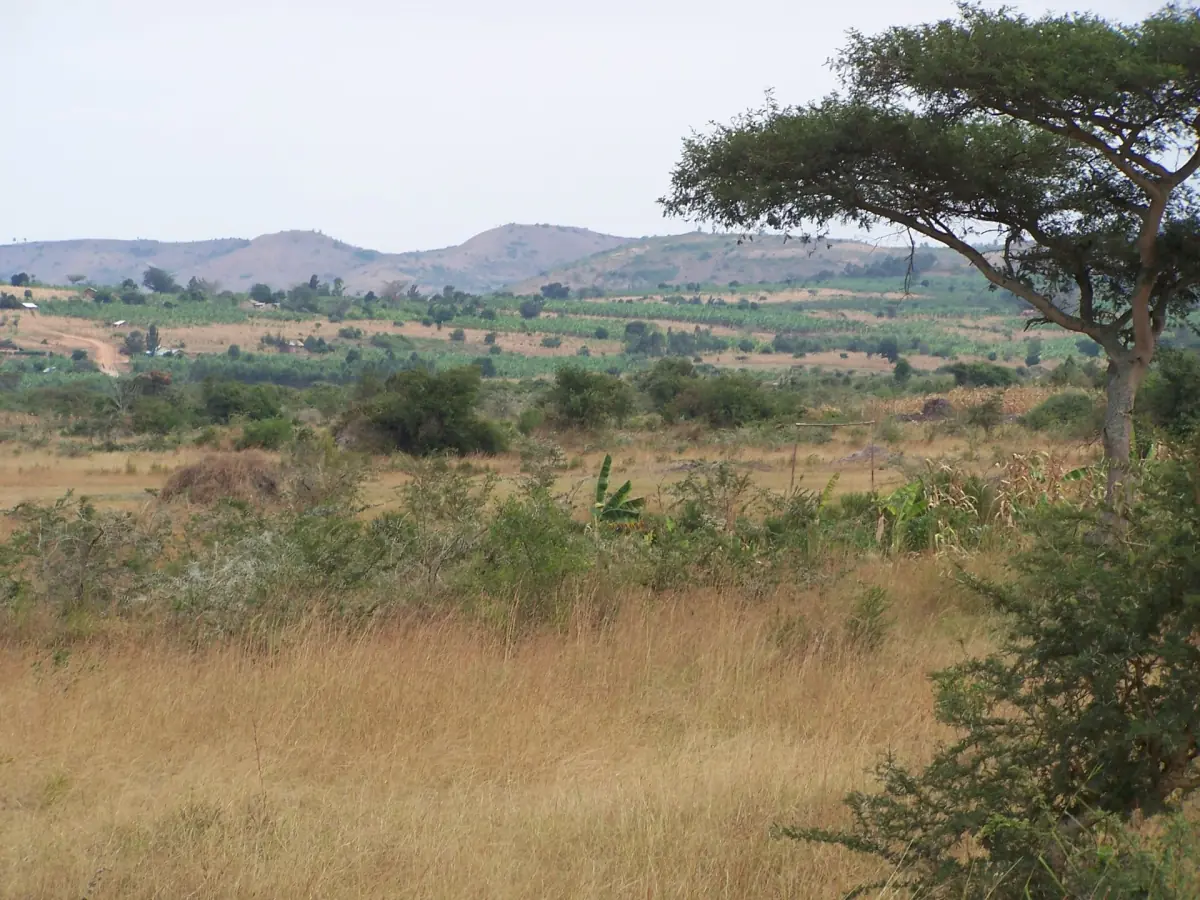
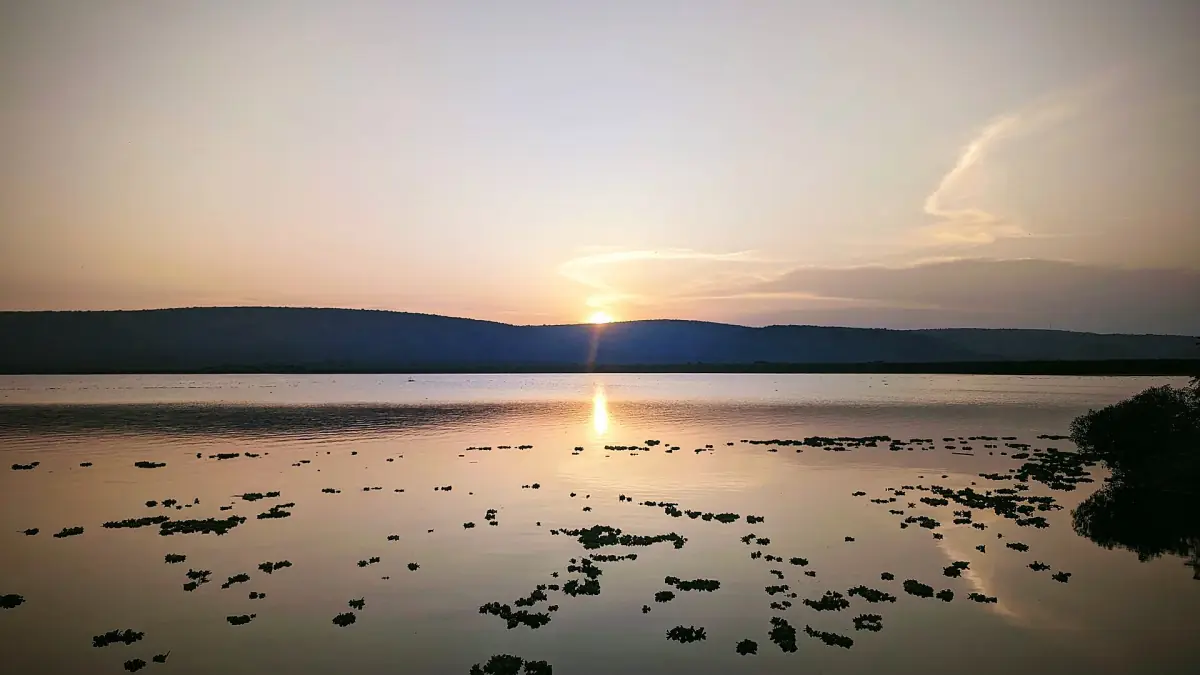
Lake Mburo covers 370 square kilometres of acacia savanna, open grassland and wetland in south-western Uganda, between 1,220 and 1,828 metres above sea level. Five lakes lie inside the park boundary. The mix of open plains and water means you can see plains animals on a game drive and water animals from a boat on the same trip. If you want to plan the days, start with the page on a Lake Mburo safari.
Zebras, impalas, eland, topi, buffalo, warthogs, waterbucks, leopards, hyenas, hippos and crocodiles live in the park. Elephants are not part of the picture here. Being present is not the same as being seen, and no guide can promise a sighting on a given day.
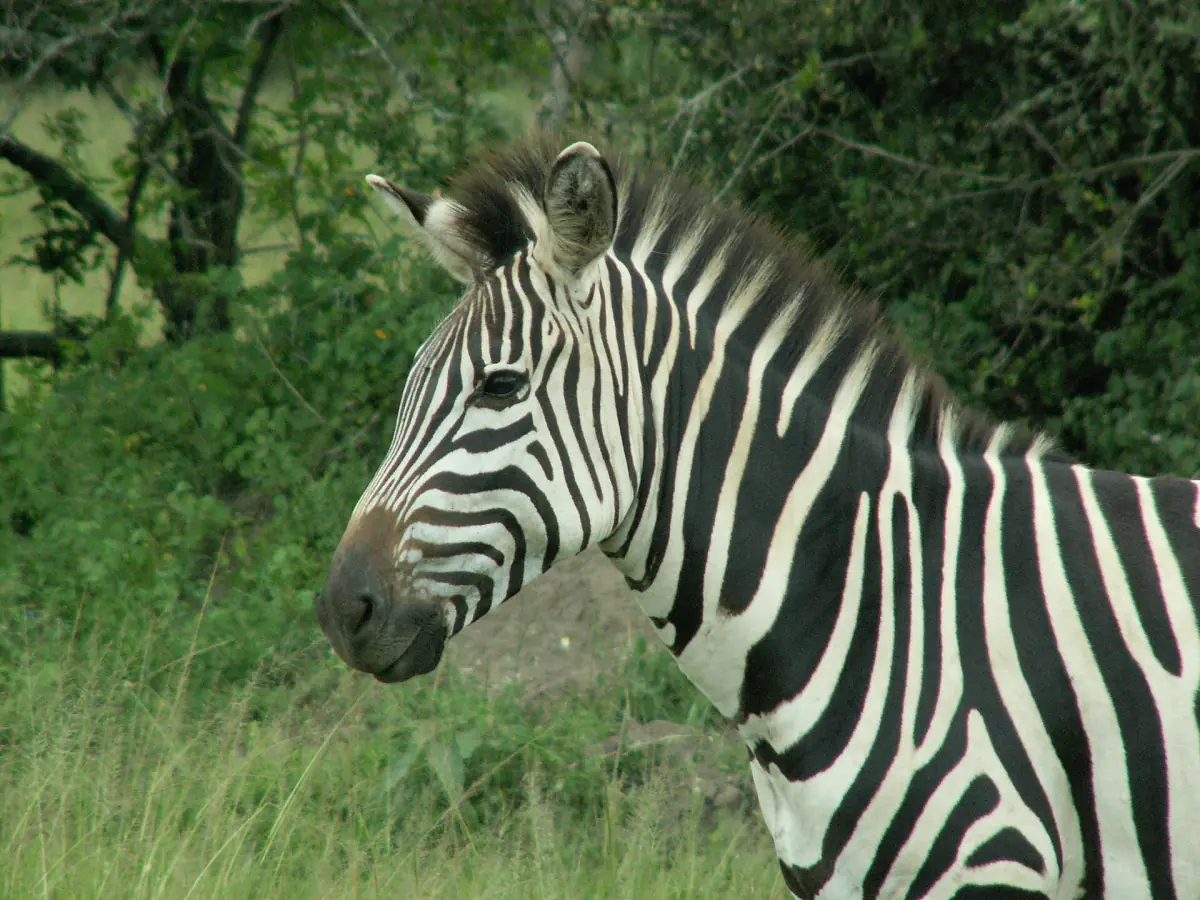
Which animals live at Lake Mburo
The main groups, and where to look for them.
Zebras
Plains zebras, also called Burchell's zebras, graze on the open ground and often stand near impalas.
Impalas, eland and topi
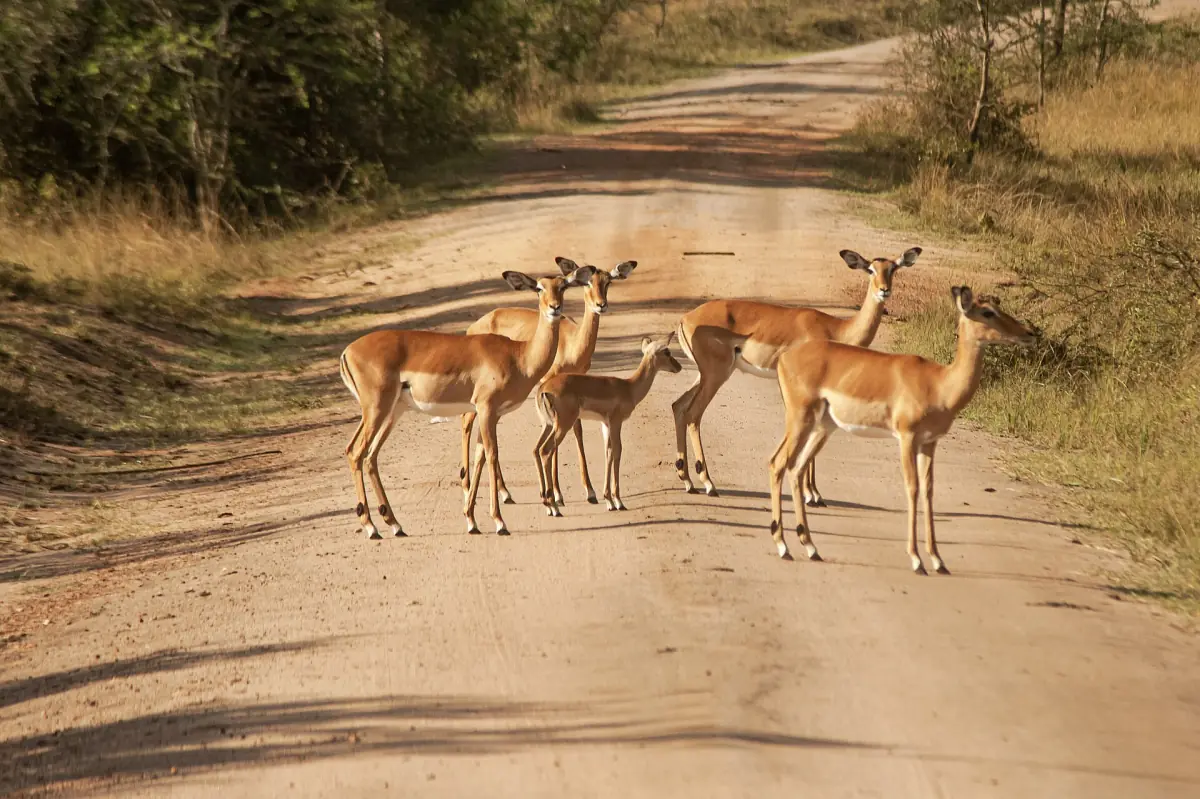
Impalas are the antelope you meet most often. Eland and topi live here too and need a bit more patience.
Buffalo and warthogs
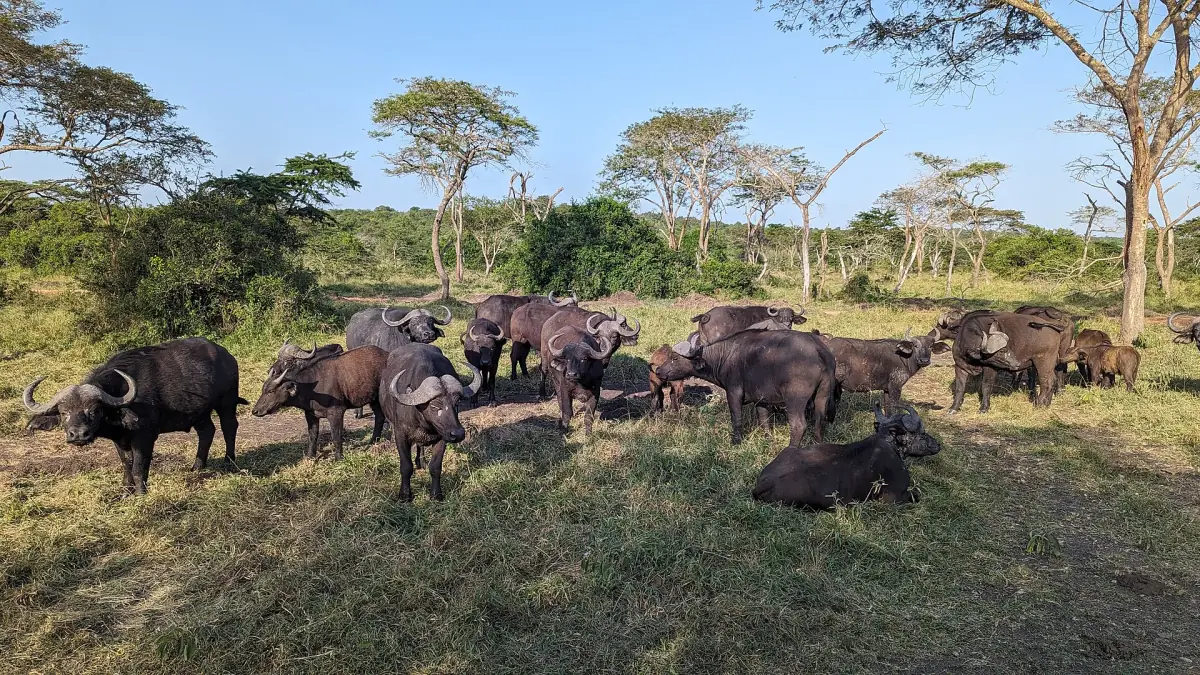
Buffalo graze in herds under the acacias. Warthogs trot through the tall grass.
Hippos and crocodiles
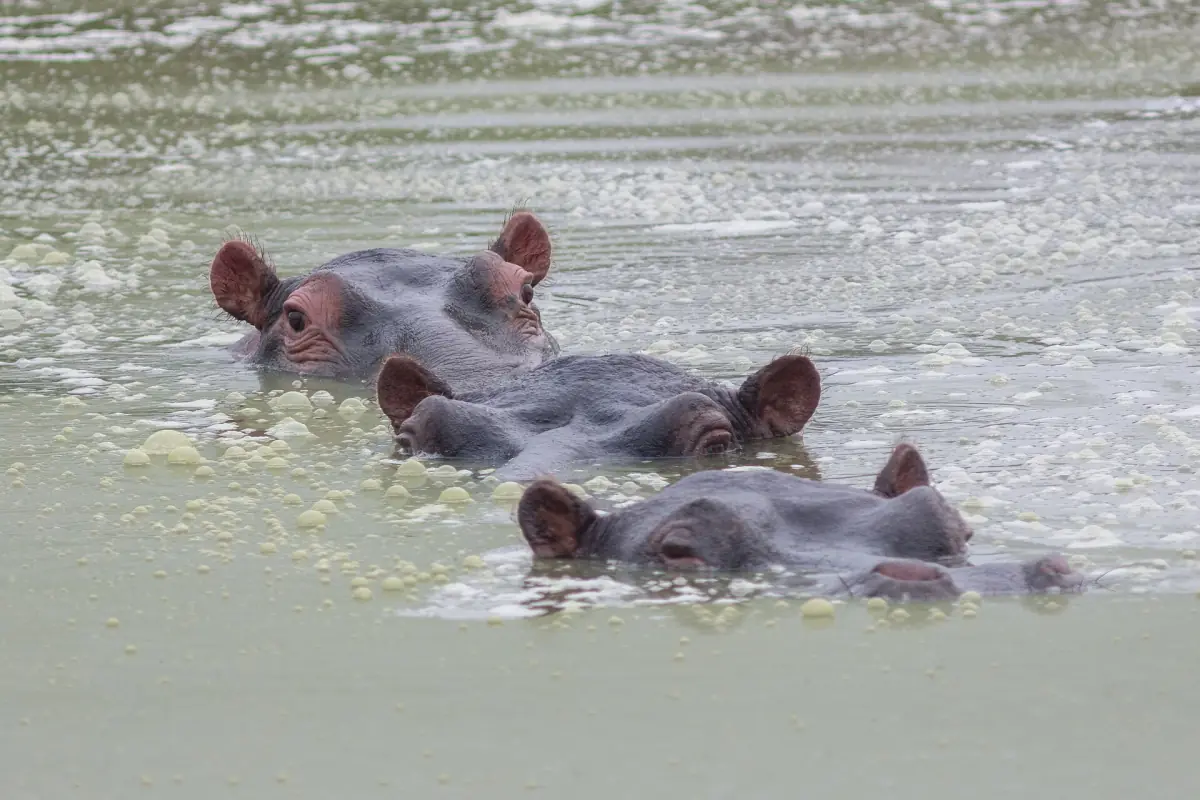
Both live in the lake and its shallows. On the boat trip you see them from the water.
Lake Mburo boat trip →Leopards and hyenas
Both live in the park. They are active mostly after dark and are seldom seen on a day drive.
Giraffes
Giraffes were brought to the park in 2015. The herd has grown since, and estimates put it above 50 animals.
Our pick: a Lake Mburo wildlife safari
A game drive and a boat cruise cover both the savanna and the lake in one trip.
Hand-picked tours, booked through GetYourGuide. Prices are indicative starting prices in US dollars (as of October 2026). Tap a tour for live availability and the current price in your currency.
Lake Mburo safaris and trips from Kampala
Game drives, boat cruises and combined trips to see zebras, impalas and hippos, with live prices and availability.
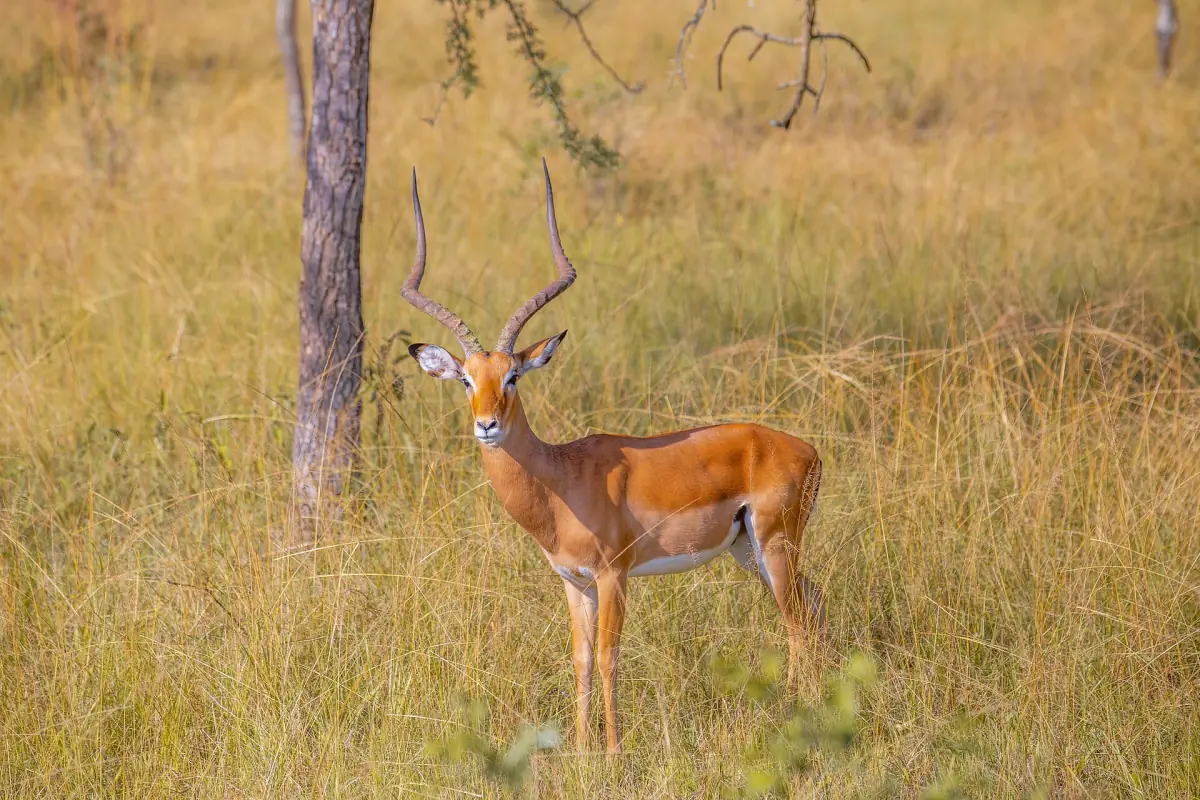
Impala: the signature antelope
Impalas are the antelope many visitors associate with Lake Mburo. The males carry long curved horns, and herds often stand together in the open grass. They are among the animals you are most likely to see, though no sighting is promised.
Eland and other antelope
The eland is a very large antelope and the one that asks for patience. Topi, recognisable by the dark face and ringed horns, and the waterbuck complete the list.
Zebra in Uganda
Zebras are a signature animal of Lake Mburo. They are plains zebras, part of the common steppe zebra group, not Grevy's zebra. Look for them on open ground and along the tracks, and ask your guide where groups were seen recently.
Giraffes, buffalo and predators
The giraffes are Nubian giraffes. Fifteen animals were moved here from Murchison Falls in 2015. They feed on acacias in the open woodland, so scan the tree line as well as the ground.
Buffalo can be dangerous at close range, so stay in the vehicle or with your ranger. Do not plan your trip around lions. A lone roaming lion has been seen in the past, but there is no current count, and elephants are absent. For elephants, see the Queen Elizabeth wildlife guide.
Birds of Lake Mburo
More than 315 species live in the park.
The park has more than 315 bird species, and some counts run as high as 332. They include the bare-faced go-away-bird and the southern ground hornbill. Water birds gather around the lakes and wetland, so the boat trip works for birders as well as hippo fans. You can also book a nature walk or birding walk with a ranger. Bring binoculars and ask the guide which species have been active in recent days. A bird list does not promise any single species.
How to look for wildlife
Four ways to see the park, each with its own fee.
Game drive
Drive the tracks in the early morning or late afternoon, with a guide or ranger. Self-drive is possible, with its own fee. See the park fees.
Boat trip
A trip lasts about 2 hours and goes along the shore for hippos, crocodiles and water birds.
Walks
Rangers lead nature walks. Walks go around Rwonyo, the salt licks and the Rubanga Forest. Ask which routes run on your dates. See the walking safari page.
Night drive
Night drives are for guests who sleep in the park, and a UWA guide must come along. This is when leopards and hyenas are most likely to show.
Park rules apply to everyone. The gates are open from 07:00 to 19:00, the speed limit is 40 km/h, you stay on the tracks, and you do not disturb animals. Pets are not allowed.
More about Lake Mburo
Pages that go with the animals.
Lake Mburo animals: frequently asked questions
Are there elephants at Lake Mburo?
No. Elephants are absent. The park is known for zebras, impalas, eland, buffalo, hippos and birds instead.
Are there lions in Lake Mburo?
Lions are not part of what you should plan for. A single roaming lion has been seen in the past, but nobody can promise one, and there is no current count.
Can I see zebras on every visit?
Zebras are among the most visible animals, but no sighting is guaranteed. Early morning and late afternoon are the best times to look.
How many bird species are there?
The park has more than 315 species, and some counts say 332. Ask your guide which ones are active during your visit.
Are there giraffes at Lake Mburo?
Yes. 15 Nubian giraffes were brought from Murchison Falls in 2015, and the herd is estimated at more than 50 animals today. Sightings are never guaranteed.